
WHAT IS SACRED FEMININE PSYCHOLOGY?

A psychological framework developed specifically for understanding women's development
Defining sacred feminine psychology requires understanding what traditional psychology missed. Sacred feminine psychology, pioneered by Jungian analysts like Marion Woodman and Clarissa Pinkola Estés, offers something different: a psychology that understands women's development through women's experiences.
It's a clinical framework that takes women's psychological reality seriously.
What Sacred Feminine Psychology Is
This framework shifts how we understand women's psychological development in five key ways:
Recognizes cyclical rather than linear development. Women's psychological growth doesn't follow a straight line toward some fixed endpoint. We spiral through themes, return to old wounds with new understanding, integrate in layers. This isn't regression or pathology — it's how feminine development actually works.
Centres the body as a source of psychological wisdom. Your body holds information your mind has forgotten or suppressed. Dreams, physical sensations, intuitive knowing — these aren't peripheral to psychological understanding, they're central to it.
Understands women's developmental transitions as psychological thresholds. Menarche, sexuality, motherhood (or chosen non-motherhood), perimenopause, menopause — these aren't just physical events. They're psychological transitions that reshape identity, power, and self-understanding in ways traditional developmental psychology doesn't account for.
Names the psychological impact of patriarchal conditioning. We can't understand women's depression, anxiety, or patterns of losing ourselves without understanding the cultural conditioning that taught women to prioritize others' comfort over their own needs, suppress anger and perform niceness, disconnect from their body's signals, doubt their own perception, and make themselves small.
Uses archetypal and mythological frameworks. The stories we carry — fairy tales, myths, cultural narratives about women — shape our psychology. Understanding these patterns helps us recognize what we're living out unconsciously.
Where This Framework Comes From
Psychology's foundational frameworks weren't built for women. Intuition was suspect. Body wisdom was irrelevant. Cyclical rhythms were invisible. Emotional depth was a problem to manage.
Jungian psychology began shifting this by recognizing archetypal patterns and the psychological significance of myth and symbol. But it took women analysts — particularly Marion Woodman and Clarissa Pinkola Estés — to develop frameworks that understood women's psychological development on its own terms.
Woodman focused on the body as a source of psychological wisdom, working with eating disorders, addiction, and the ways women's bodies rebel against psychological constraint.
Estés drew on folklore and myth to show how women's psychological patterns mirror archetypal stories — and how understanding those patterns helps women recognize and change them.
Their work gave us psychological frameworks that actually fit women's developmental reality.
The Archetypal Framework: Maiden, Mother, Queen, Crone
These aren't literal life stages you move through in order. They're psychological territories — ways of being that emerge at different points, regardless of your age or whether you have children.
You might recognize yourself in more than one. You might feel firmly in one right now. Understanding these patterns helps you name what you're navigating — and what's ready to change.

THE MAIDEN | DIFFERENTIATION
Psychological Task: Separation, identity formation, becoming
Common Struggles: Insecurity, belonging wounds, boundary violations, people-pleasing
Clinical Presentation: Women in Maiden psychology (regardless of age) are asking: Who am I separate from what's expected of me? What do I actually want? What am I willing to carry?
The Maiden's work is differentiation — becoming distinct from family expectations and cultural conditioning.
"And the day came when the risk to remain tight in a bud was more painful than the risk it took to blossom." — Anaïs Nin
THE MOTHER | CREATION & GENERATIVITY
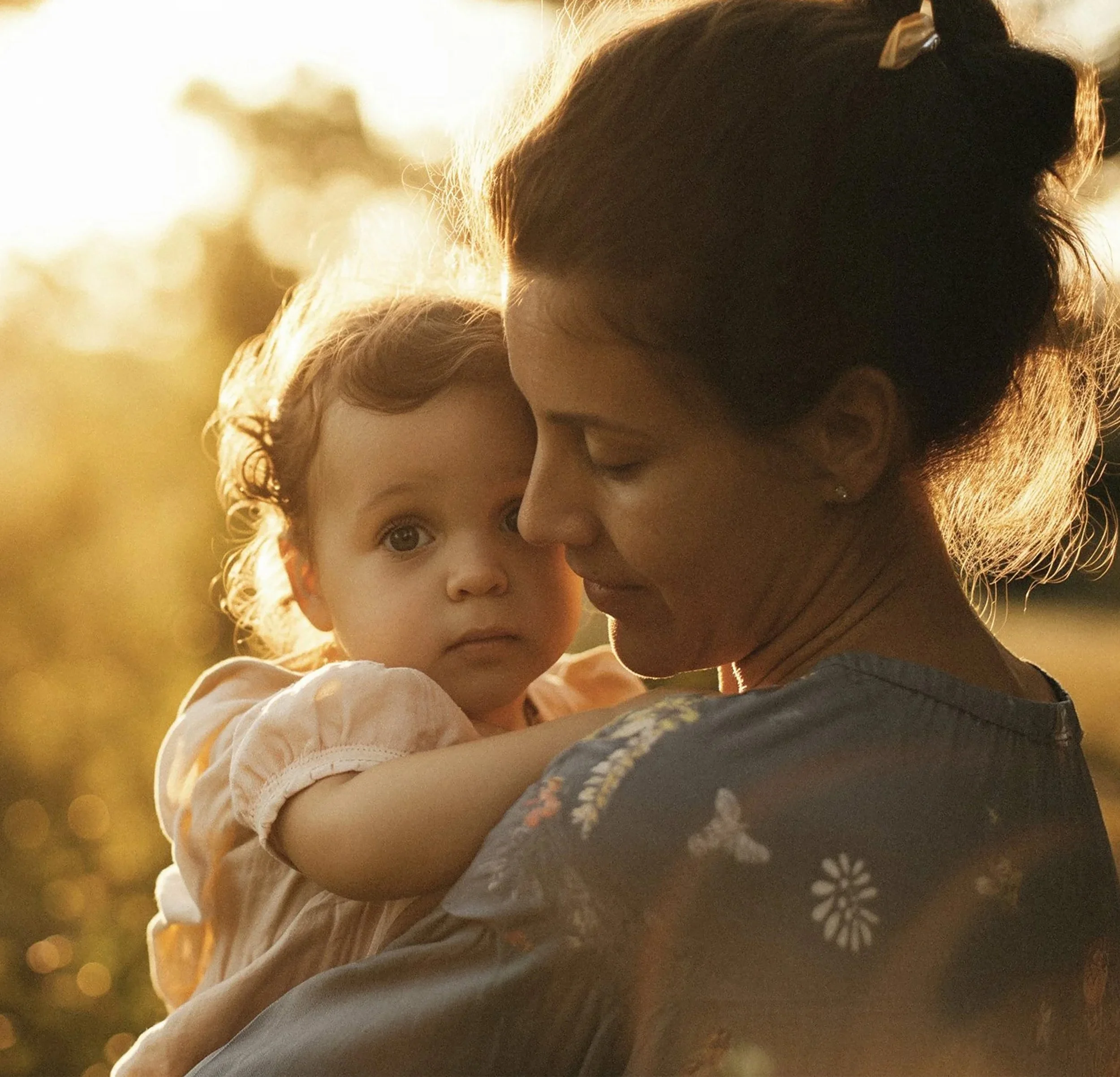
Psychological Task: Creation, nurturing, expansion (of self, relationships, work, meaning)
Common Struggles: Depletion, over-responsibility, loss of self, resentment
Clinical Presentation: The Mother archetype isn't about having children. It's about the psychological work of creating, tending, and sustaining — whether that's a career, art, relationships, community, or family.
This stage brings pressure to excel, serve, nurture, and hold everything together. Women in Mother psychology struggle with: What nourishes me? What boundaries sustain me? Am I creating a life FOR myself or INSTEAD of myself?
The Mother's psychological work is learning to tend yourself with the same devotion you give to what you're creating.
"You alone are enough. You have nothing to prove to anybody." — Maya Angelou

THE QUEEN | RECLAMATION & SOVEREIGNTY
Psychological Task: Reclaiming voice, boundaries, authentic self
Common Struggles: Losing yourself, rage at years of accommodating, grief over what was given away
Clinical Presentation: The Queen represents midlife psychological territory — particularly the perimenopausal and menopausal years when a woman's tolerance for inauthenticity collapses.
The body itself becomes the truth-teller: hot flashes interrupt pretense, insomnia demands attention, exhaustion rejects the performance of "fine."
This is when women ask: What have I been carrying that isn't mine? What does my life look like when it's shaped around my truth instead of my obligations? What must I grieve to reclaim what's mine?
What medicine often calls symptoms — the insomnia, the exhaustion, the volatility — might actually be the body refusing to cooperate with a life that doesn't fit anymore.
The Queen's psychological work is sovereignty — reclaiming time, energy, desire, and voice. This requires mourning what was given away, and choosing herself not as abandonment of others, but as return to integrity.
"If you have yet to be called an incorrigible, defiant woman, don't worry, there is still time." — Clarissa Pinkola Estés

THE CRONE | INTEGRATION & WISDOM
Psychological Task: Integration of life experience into wisdom, legacy work
Common Struggles: Ageism, invisibility, isolation, unacknowledged grief
Clinical Presentation: The Crone represents late-life psychology — when a woman integrates the full arc of her experience into wisdom.
Where the Queen burns away what's not hers, the Crone embodies what remains.
Women in Crone psychology ask: What truly matters now? What legacy — emotional, relational, creative — do I choose to leave? How do I want to be remembered?
The Crone's psychological work is truth-telling without performance. She no longer contorts herself to maintain relationships that require her to be smaller. Her energy is refined. She chooses carefully where to invest it.
This stage often brings a longer view — a sense of what she wants to leave behind, and for whom.
"The crone is a woman who has faced her fears, lived through her betrayals, and come to the place where she can say: my life is my own." — Marion Woodman
Why This Framework Matters Clinically
We live in a culture that rewards over-functioning, demands emotional suppression, and disconnects women from bodily wisdom — all rooted in patriarchal conditioning.
Women show up to therapy exhausted from performing "fine," ashamed of having needs, burned out from giving what was never asked for but always expected. They've lost trust in their bodies, their emotions, their right to take up space.
Traditional psychology often treats these as individual pathologies without naming the cultural conditioning that created them.
Sacred feminine psychology provides frameworks for understanding why women lose themselves (not personal failure, but learned survival), why healing isn't linear (cyclical development is normal, not regression), and why the body rebels (it's trying to restore truth, not malfunction).
It explains why midlife is psychologically volatile (it's developmental transition, not decline) and why women's development doesn't match male models (because it shouldn't).
This isn't abstract theory. It's how I understand what brings women to therapy — and how I work with it.
In Closing
Sacred feminine psychology is a clinical framework that takes women's psychological reality seriously — understanding women's development through women's experiences, not through frameworks built for men.
Through archetypal understanding (Maiden, Mother, Queen, Crone) and recognition of how patriarchal conditioning shapes women's psychology, this framework provides tools for understanding patterns of losing yourself, body wisdom, cyclical development, and the specific psychological work of each life stage.
This is how I honour both clinical rigor and the complexity of women's psychological lives.
INTERESTED IN WORKING TOGETHER?
If this resonates, I invite you to book a free consultation call.
We'll explore what you're navigating and whether my approach feels right for you.